The global logistics chain is sensitive to so-called “chokepoints”: sea routes and energy corridors that, when strained, trigger a domino effect on transport, insurance, availability, and lead times. In recent weeks, escalation linked to the Middle East has put the spotlight on that fragility again: increases in insurance premiums have been reported, “high-risk” areas for navigation have been expanded, and shipping lines have made operational adjustments on routes to/from the region.
For many industries, this translates into “higher logistics cost.” But in the case of cable (electrical cable, industrial cable, cable for machinery, cable for electronics, and especially custom cabling / wiring harnesses), the impact is often double: not only do the cost or lead time to move goods increase; the probability of missing one “critical part number” that blocks the whole build also increases.
What is changing in global logistics (and why it matters)
What changes first when a route becomes strained
In a factory, the consequences don’t arrive all at once as “one big catastrophe.” They arrive through the accumulation of small frictions that, together, hurt:
More expensive insurance and surcharges
When risk rises, insurance is not a detail: it becomes a real cost line. The London marine insurance market and the Joint War Committee have expanded areas considered “high risk,” and a sharp increase in premiums in the region has been reported.
Alternative routes and more transit days
If certain passages are avoided or navigation becomes more cautious, detours appear that add days, fuel consumption, and container rotation issues. In parallel, there are reports of diversions and pauses on corridors linked to the area.
Less predictable capacity (and limited bookings)
When a carrier announces it is suspending new bookings on certain routes, the industrial message is clear: the chain is not “normal.”
All of this boils down to one word that carries a very high cost in production: uncertainty.
Why cable is especially sensitive to logistics disruptions
If you buy a “monolithic” component (a motor, a PLC, a complete module), you may suffer a delay or a cost increase. But a wiring harness is not a part: it’s a system.
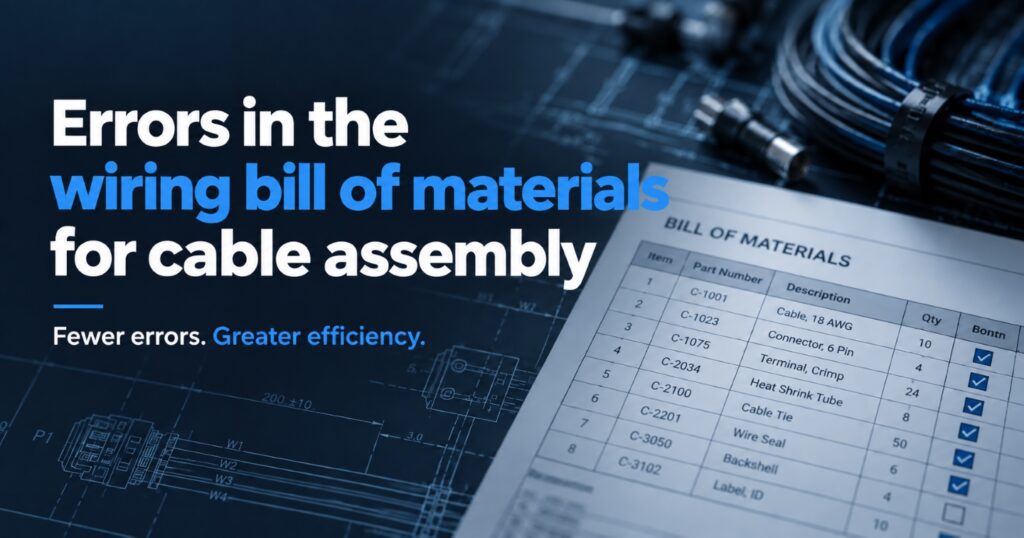
A typical harness includes many part numbers:
cable (cross-section, insulation, standard), connectors, terminals/pins, seals (if watertight), sleeves, braid, heat-shrink, ties, grommets/bulkhead fittings, labeling… plus the process (crimping with specific tooling) and testing.
And here is the part you sometimes don’t fully understand until it happens to you: you can have 90% of the material ready, but if you are missing one specific terminal or one seal for a certain cable diameter range, the harness is blocked.
On top of that, in cabling, the concept of an “equivalent” is delicate:
- a “similar” connector may require a different terminal,
- a different terminal may require another applicator or crimp setting,
- a change in insulation/diameter can affect sealing and grommets,
- and any modification may force a new sample or re-validation.
That is why, when logistics become unpredictable, industrial cabling suffers disproportionately.
Domino effect: energy, raw materials, and polymers
Conflicts that strain energy corridors often impact energy costs and, indirectly, key materials for cable:
- Energy: affects manufacturing and transport (cost per meter, process cost, logistics cost).
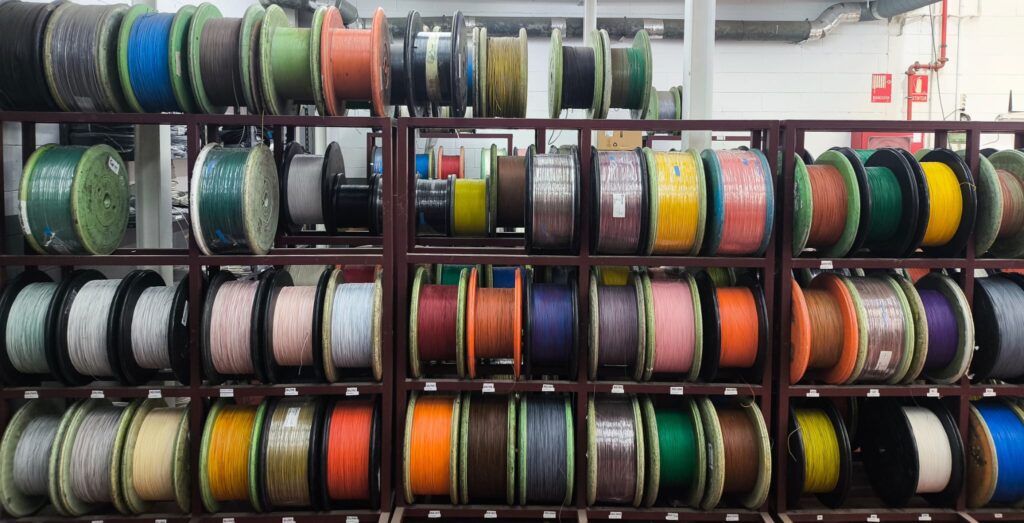
- Polymers: cable depends on insulating compounds (PVC, PE, XLPE, PUR, etc.) whose cost and availability are influenced by energy and petrochemicals.
- Industrial planning: when insurance rises and routes lengthen, the need for stock increases, putting pressure on inventory and cash.
In tense periods, many companies feel the hit not because of “one major failure,” but because of accumulated small frictions: surcharges, variable lead times, partial lots, expediting.
What concrete impacts manufacturers and OEMs will see in cables and harnesses
In a logistics disruption environment, it is common to see:
More unstable lead times
Not only due to transit time. Also because connector/terminal suppliers adjust production, prioritize regions, or face replenishment delays.
More partial shipments and more rescheduling
Companies try to “save” production with what is available, but a harness requires all parts to fit together.
Higher total cost (not only transport)
The invisible cost appears: change management, expediting, duplicated safety stock, line downtime, or delayed deliveries to the end customer.
More pressure on engineering
When a part number is missing, substitution is considered. And risks arise: changing connector/terminal/seal affects reliability, assembly, and validation.
How to reduce exposure: a practical strategy for cabling and harnesses
Without going into “magic recipes,” there are very real measures that reduce surprises in cabling projects:
Smart standardization
Reduce variants of cross-sections, cable families, and connectors when possible. Fewer part numbers means fewer failure points.
Approved alternatives (dual sourcing)
Define from the design stage which part numbers have a valid alternative (and under what conditions). This avoids redesigning “in a crisis.”
Freeze the specification earlier
Lengths, cross-sections, connectors, and critical accessories: the earlier you lock them, the lower the chance of rework.
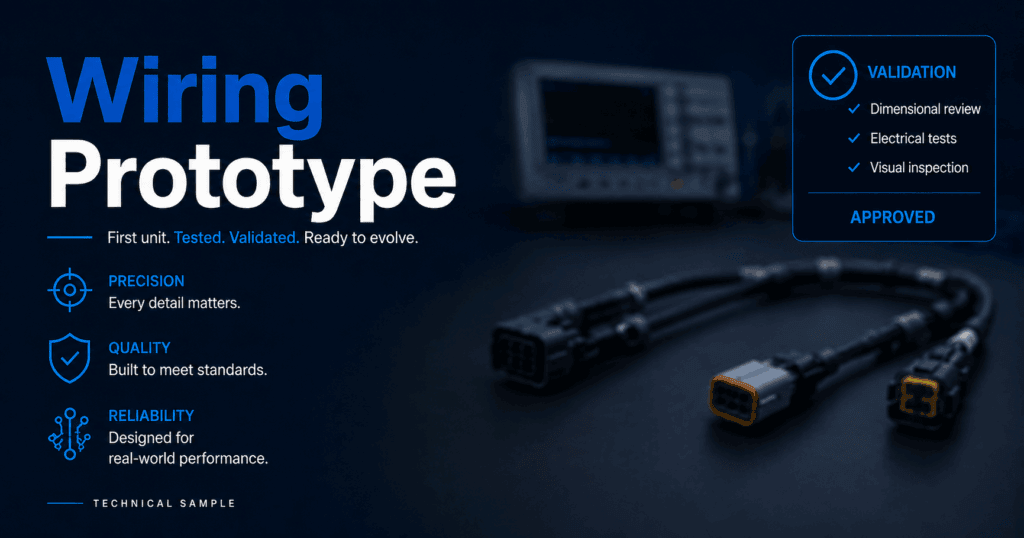
Phased validation (sample → series)
In harnesses, early validation prevents surprises when you must substitute something or scale up.
A nearby supplier + ability to react
In a volatile world, many companies are rebalancing purchasing criteria: not only price, but stability, communication, and responsiveness to change. When the environment gets complicated, being able to iterate fast and confirm real availability makes the difference.
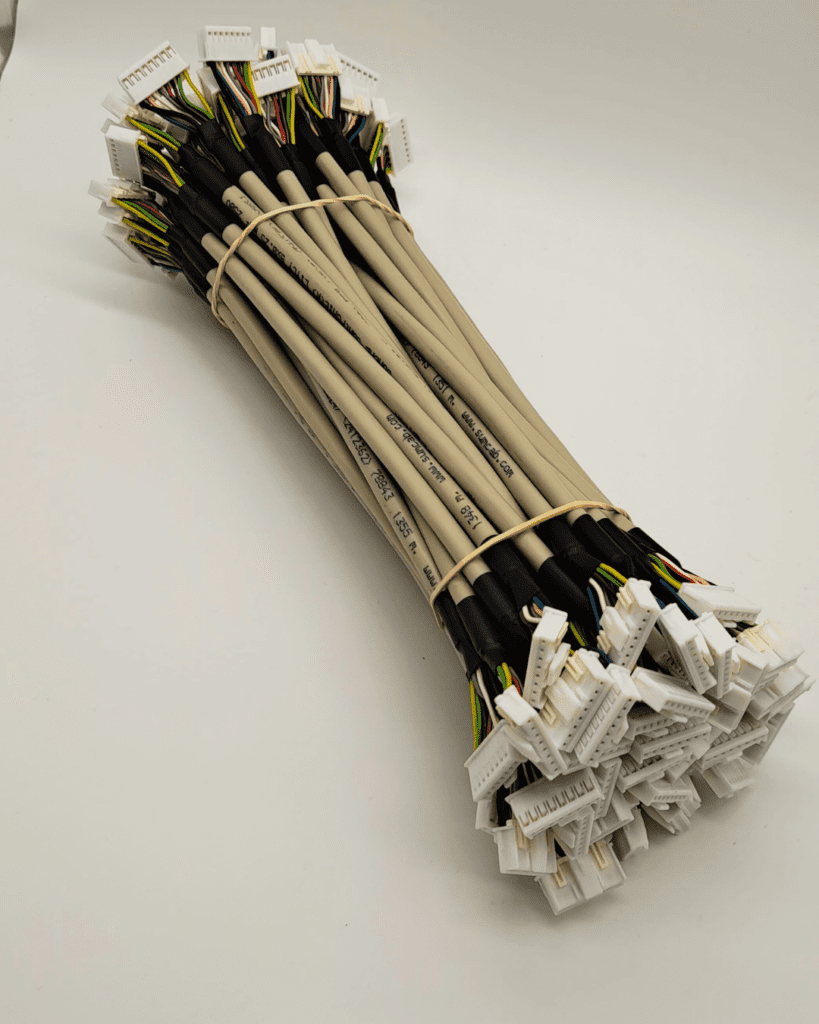
The Middle East conflict does not only affect “the headlines.” It affects global logistics through insurance, routes, and availability, and that ultimately lands in production. In the case of cable and custom cabling / wiring harnesses, the effect is amplified because a harness is a system: if one critical part number is missing, everything stops.
The best response is not alarmism. It is management: standardize, approve alternatives, validate in phases, and build a more predictable supply chain.
At JM Cableados we work daily with custom cabling, wiring harnesses, and ready-to-install assemblies/sub-assemblies, precisely so that cabling is not the weak point when the environment becomes unpredictable.